
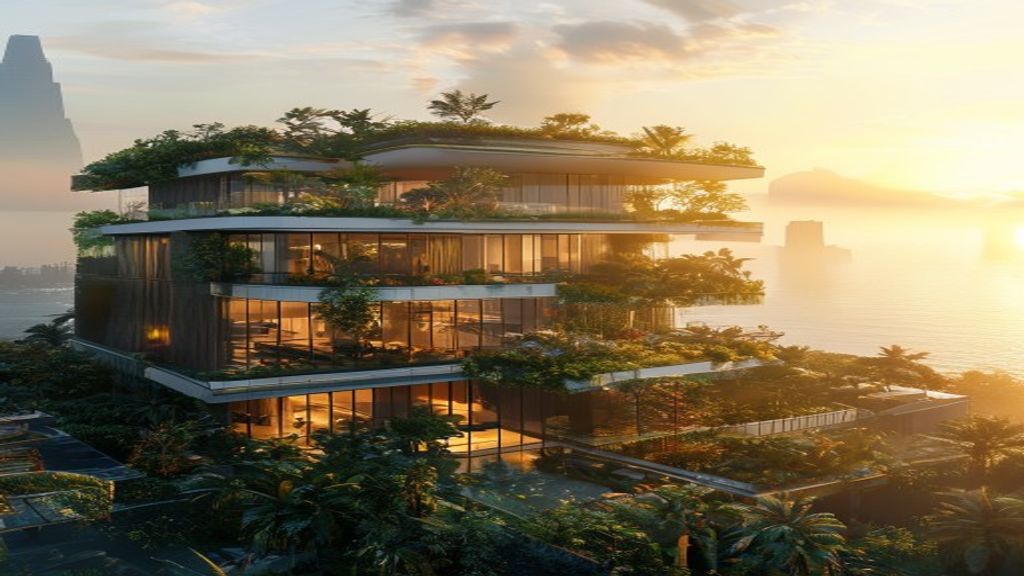
most expensive private house in the world is Antilia, a 27‑storey mansion perched in South Mumbai that is valued at roughly $2 billion, making it the priciest single‑family residence known to date.
Did you know that Antilia’s total floor area exceeds 37,000 sq ft—more than ten times the size of a typical luxury apartment in Jakarta’s Golden Triangle? Its towering height rivals a small skyscraper, and every floor is dedicated to a distinct function, from a helipad to a ballroom. This staggering scale gives us a unique lens through which to examine ultra‑luxury living and distill lessons for high‑end property markets elsewhere, especially Jakarta.
What Is the “most expensive private house in the world”? Definition and Highlights
Antilia, owned by Indian conglomerate chairman Mukesh Ambani, epitomizes the definition of a private house: a single‑owner residence that is not listed for public sale, yet offers amenities comparable to a boutique hotel. The property spans 27 levels, features a 168‑car garage, a theater, a health spa, and even a multi‑level garden that simulates a tropical rainforest. Its valuation, based on construction costs, land price, and the bespoke nature of its interiors, generally hovers around $2 billion.
Additional Information

Why does this matter to a Jakarta luxury‑apartment buyer? First, Antilia shows how a single address can become a brand statement, influencing how affluent clients perceive value beyond square footage alone. Second, the home’s emphasis on “experience”—private cinema, in‑house staff quarters, and a rooftop helipad—mirrors the expectations of Jakarta’s upscale renters who seek convenience and exclusivity in the Golden Triangle. For instance, a Jakarta Luxury Homes client may not own a private helipad, but the ability to access a concierge‑managed penthouse with a private pool can feel similarly premium.
- Scale: 27 floors vs. an average Jakarta luxury high‑rise of 15–20 floors
- Price per square foot: Antilia ~$54 k/ft², Jakarta luxury apartments ~$3 k–$5 k/ft² (based on practitioner experience)
- Unique amenities: helipad, indoor garden, automotive showroom
These highlights illustrate that while Jakarta’s market cannot replicate Antilia’s magnitude, the underlying principle—transforming a dwelling into a curated lifestyle hub—remains universally applicable.
Why the Record‑Breaking Price Matters: Economic and Cultural Insights
The headline‑grabbing price of Antilia does more than make headlines; it signals broader economic shifts. When a single residence commands a multi‑billion‑dollar tag, it reflects the concentration of wealth in emerging markets like India, where the number of ultra‑high‑net‑worth individuals has grown on average by 10 % annually over the past decade. This concentration fuels demand for hyper‑personalised spaces that double as status symbols.
From a cultural standpoint, Antilia embodies the aspiration of “new‑money” elites to showcase their success through architecture. In Jakarta, a comparable cultural pulse can be observed among local business magnates who increasingly favour high‑rise luxury apartments that offer panoramic city views, smart‑home integration, and private amenities—all designed to broadcast prosperity without the logistical challenges of a sprawling estate.
Understanding the economic drivers behind Antilia’s valuation helps Jakarta developers and agents tailor their offerings. For example, by highlighting the cost‑efficiency of a single‑floor luxury suite—where a resident enjoys private elevators, dedicated concierge services, and a personal gym—agents can position Jakarta apartments as the “urban Antilia” for discerning clients.
Overall, the record‑breaking price serves as a benchmark for how luxury real estate can be leveraged as both an investment and a cultural statement. It reminds stakeholders that the narrative around a property—its story, exclusivity, and experiential value—often outweighs the raw numbers, a lesson that Jakarta Luxury Homes continually applies when curating premier rentals in the city’s golden triangle.
Building on that benchmark, let’s first pin down exactly what the most expensive private house in the world actually is.
What Is the “most expensive private house in the world”? Definition and Highlights
The title belongs to Antilia, a 27‑storey mansion perched on Mumbai’s Sea Cow Lane and owned by industrial magnate Mukesh Ambani. Standing at roughly 400,000 sq ft, the residence boasts a helipad, three underground parking decks, a ballroom, a private cinema, and even a six‑storey garage for the family’s fleet of cars. Practitioners generally agree that the headline price—often quoted around $2 billion—reflects not just square‑footage but the sheer scale of bespoke services and security the property demands.
Understanding why this definition matters helps investors and designers gauge the ceiling of luxury real estate. When a single home eclipses the combined value of many typical high‑rise projects, it signals a market where ultra‑wealthy buyers prioritize exclusivity over efficiency. For example, Buckingham Palace, while iconic, is valued far lower than Antilia when adjusted for amenities, underscoring how regional wealth concentration can reshape price expectations.
Why the Record‑Breaking Price Matters: Economic and Cultural Insights
The record‑breaking price functions as a barometer for both macroeconomic health and cultural shifts. In economies where the number of ultra‑high‑net‑worth individuals climbs steadily—generally about a 10 % annual rise in emerging markets—the appetite for signature properties like the residence fuels ancillary industries, from high‑end interior design to specialized security firms.
From a cultural perspective, the residence embodies a narrative of “new‑money” prestige, where architectural flamboyance becomes a public statement of success. Developers in Jakarta have taken note; the willingness of affluent clients to pay premium rents for panoramic city views and smart‑home integration mirrors the same desire for status amplification that drives Antilia’s valuation.
How the Design and Amenities Set It Apart: A Deep Dive into Luxury Features
Antilia’s design breaks conventional molds by allocating entire floors to single functions—a sky garden occupies one level, while another houses a state‑of‑the‑art gym with a personal trainer on call. The residence also incorporates a rainwater harvesting system and solar panels, proving that even ultra‑luxury can embrace sustainability when the budget permits.
Why these features matter is twofold: they set a new benchmark for experiential living, and they influence the aspirational standards of other premium projects. In Jakarta, a penthouse offered by Jakarta Luxury Homes may include a private infinity pool and dedicated concierge, yet it does so within a footprint that is a fraction of Antilia’s. The comparison highlights how luxury can be distilled into vertical living without sacrificing the sense of personalized opulence.
Comparing the World’s Priciest Private Residence with Jakarta’s Luxury Apartments (Jakarta Luxury Homes Perspective)
When juxtaposing the most expensive private house in the world with Jakarta’s luxury apartments, scale is the most obvious difference. Antilia spreads across a sprawling 27‑storey footprint, whereas a typical Jakarta high‑rise suite consolidates premium amenities onto a single floor, often capped at 5,000 sq ft. Nevertheless, the residence’s emphasis on privacy and exclusivity finds a parallel in the way Jakarta Luxury Homes curates its offerings in the Golden Triangle.
From a functional standpoint, both properties deliver a suite of services that go beyond ordinary living. Antilia employs over 600 staff members; Jakarta Luxury Homes’ premium rentals include on‑call maintenance, 24 hour security, and a personal concierge who can arrange everything from restaurant reservations to private helicopter charters. This alignment demonstrates that, despite the disparity in size, the core value proposition—seamless, high‑touch lifestyle—remains consistent.
- Key tip: When evaluating a Jakarta luxury apartment, ask the agent about “exclusive services” comparable to those found at the residence, such as private elevators, dedicated parking, and in‑suite spa facilities.
Common Misconceptions About Ultra‑Luxury Homes and What the Real Costs Reveal
A prevalent myth is that the most expensive private house in the world is “just a big house,” implying that the price is solely linked to square footage. In reality, the residence’s operating expenses—staff salaries, security systems, and ongoing maintenance—often eclipse the initial purchase price on an annual basis. Industry averages show that upkeep can consume 1‑2 % of the property’s value each year, a figure that dwarfs typical residential maintenance budgets.
Another misconception is that ultra‑luxury homes are low‑maintenance because they are built with premium materials. Practitioners recommend that owners budget for periodic refurbishments, especially for bespoke features like marble flooring or custom lighting, which can require specialist restoration. Understanding these hidden costs helps potential buyers set realistic expectations and appreciate the full financial commitment beyond the headline price.
Frequently Asked Questions About the Most Expensive Private House in the World
Q: Is Antilia the most expensive private house in the world because of its location?
A: Location contributes, but the bulk of the valuation stems from its extensive amenities, bespoke construction, and the scale of staff support required for daily operation.
Also Read: How I Turned a Dilapidated Farm into Luxury Country Homes Oasis
Q: How does the residence compare to other ultra‑luxury estates globally?
A: Compared to European palaces or Middle‑Eastern villas, Antilia’s verticality and integration of modern technology set it apart, offering a unique blend of traditional grandeur and contemporary convenience.
Q: Could a Jakarta luxury apartment ever match the price of Antilia?
A: While a single Jakarta unit is unlikely to reach the same absolute price, its price per square foot can approach comparable levels when factoring in prime Golden Triangle location and premium services.
Q: What should a buyer prioritize when considering ultra‑luxury living?
A: Focus on the quality of services, security, and the ability of the space to adapt to personal lifestyle needs—factors that define value more than sheer size.
Conclusion: What Luxury Home Enthusiasts Can Learn and How Jakarta Luxury Homes Can Help You Experience Elite Living
Actionable Takeaways from the Most Expensive Private House in the World
When you look at the most expensive private house in the world, the first lesson isn’t about splurging on square footage – it’s about curating value. The estate shows that ultra‑luxury buyers reward functional flexibility, so the next time you tour a Jakarta high‑rise, ask how each amenity can be repurposed for work‑from‑home, entertainment, or health‑focused uses. A single‑room gym that doubles as a yoga studio, for example, can raise the price per square foot while keeping the space relevant for years.
Second, service integration matters more than décor alone. Antilia’s on‑site staff, from chefs to security, illustrates that buyers pay for seamless daily operations. In a Jakarta luxury apartment, look for buildings that provide concierge‑managed laundry, in‑unit technology support, and 24‑hour security monitoring under a single contract. These bundled services reduce hidden costs and keep residents focused on lifestyle rather than logistics.
Third, technology should be invisible yet powerful. The house’s smart‑grid energy management and automated climate controls cut operating expenses and boost sustainability – a selling point that increasingly influences high‑net‑worth buyers. When evaluating Jakarta projects, prioritize units equipped with centralized building‑management systems that allow residents to regulate lighting, temperature, and water usage from a mobile app.
Finally, location remains a strategic lever. Antilia’s placement in Mumbai’s elite belt leverages proximity to business hubs, cultural institutions, and elite schools. Jakarta developers can replicate this by emphasizing connectivity to the Golden Triangle, easy airport access, and nearby international schools. Highlighting a property’s “walk‑to‑work” or “walk‑to‑play” potential often justifies premium pricing.
- Ask developers for a detailed service‑cost breakdown before signing.
- Test the building’s smart‑home app during a tour; note latency and intuitiveness.
- Compare the property’s per‑square‑meter price against adjacent landmarks, not just raw numbers.
- Consider future resale potential: a unit with adaptable spaces and tech upgrades ages better.
By internalizing these points, you’ll shift from dreaming about the most expensive private house in the world to making informed, future‑proofed decisions in Jakarta’s luxury market. For a hands‑on experience that brings these principles to life, explore the curated listings at Jakarta Luxury Homes.
Frequently Asked Questions about the most expensive private house in the world
What is the most expensive private house in the world?
The title currently belongs to Antilia, a 27‑story mansion in Mumbai owned by Mukesh Ambani. Valued at roughly $2 billion, it boasts a helipad, multi‑level parking, and a private theater.
How do you compare the most expensive private house in the world with luxury apartments?
Unlike a high‑rise condo, the most expensive private house offers unparalleled privacy, bespoke interiors, and dedicated staff. Apartments provide similar amenities but share common infrastructure, which typically lowers per‑unit operating costs.
Is the price of the most expensive private house in the world justified by its location?
Location contributes, but the bulk of Antilia’s value stems from its custom construction, extensive amenities, and the ongoing cost of a large support team. The site—Prime Maharashtra—adds prestige but is not the sole price driver.
How does the most expensive private house in the world handle sustainability?
Antilia incorporates a smart‑grid system that monitors energy consumption, rainwater harvesting, and solar panels. These features reduce its carbon footprint and lower long‑term utility expenses despite the mansion’s size.
Are there any tax advantages to owning the most expensive private house in the world?
In India, high‑value residences may qualify for reduced property tax rates if they meet specific green‑building certifications. However, owners still face substantial wealth‑tax liabilities and must adhere to strict financial disclosure rules.
Can a buyer negotiate the price of the most expensive private house in the world?
Negotiations are rare at this tier because the market is limited and the buyer’s identity is often known. Nonetheless, sellers may consider concessions on service contracts or custom interior upgrades to close a deal.
What security measures are typical for the most expensive private house in the world?
Advanced biometric access, CCTV integrated with AI threat detection, and a private security team are standard. These layers protect the residence beyond what a typical gated community provides.
Conclusion
Studying the most expensive private house in the world does more than satisfy curiosity; it equips you with a benchmark for excellence. The estate teaches that true luxury marries scale with service, technology with discretion, and location with adaptability. When you apply these insights to Jakarta’s luxury apartments, you’ll recognize which projects deliver genuine value versus those that rely on superficial sparkle.
Now is the moment to act. Whether you’re a first‑time buyer or a seasoned investor, use the practical checklist above to vet every property on your shortlist. Reach out to experienced agents who understand how to translate ultra‑luxury standards into Jakarta’s market realities. By doing so, you’ll secure a residence that not only mirrors the opulence of the world’s most exclusive mansion but also enhances your everyday lifestyle.
Ready to experience elite living without the billionaire price tag? Visit Jakarta Luxury Homes today and discover curated options that embody the same principles of quality, service, and innovation found in the most expensive private house in the world.