
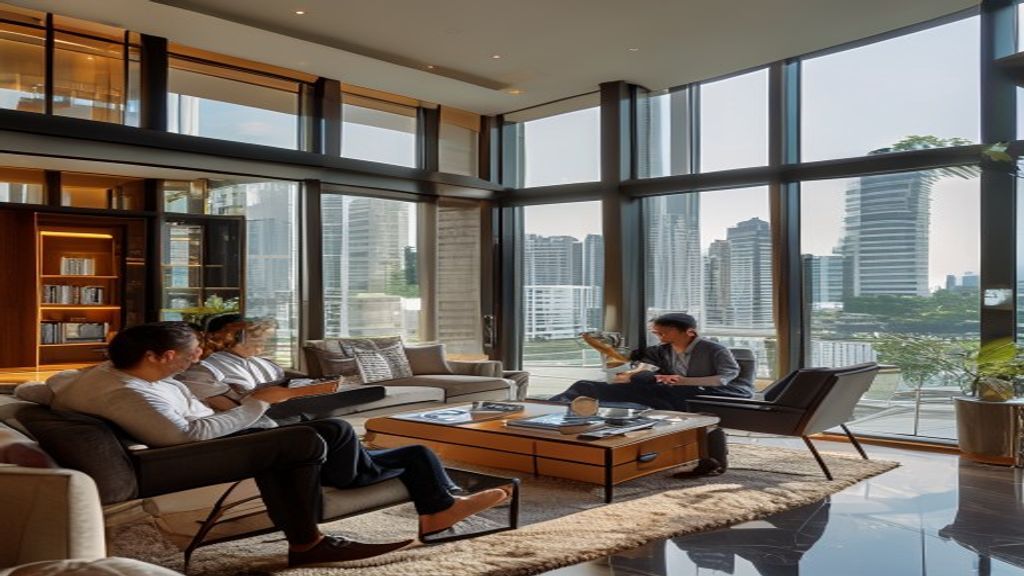
kensho townhouse is a shared‑ownership residential model where a group of affluent renters collectively purchase a modern townhouse, each receiving a private unit while sharing communal amenities and management costs. Because the purchase price is amortized across several owners, the monthly out‑of‑pocket expense can be lower than a comparable luxury apartment lease in Jakarta’s golden triangle, especially when you factor in equity‑building potential.
Many people assume that renting a conventional apartment is always cheaper than any form of ownership, but that belief overlooks hidden fees, utility mark‑ups, and the long‑term wealth‑creation that a co‑ownership model like a Kensho townhouse can deliver.
To decide which option truly fits your budget and lifestyle, let’s first clarify what the Kensho townhouse concept entails and then break down the cost structures side by side with traditional rental apartments.
Additional Information

Kensho Townhouse: Definition, Benefits, and How It Works
A Kensho townhouse is essentially a boutique co‑ownership scheme: a developer builds a high‑end townhouse, then sells fractional shares to individual buyers. Each owner enjoys a fully furnished, private floor‑level unit, while common areas—such as the rooftop pool, gym, and concierge service—are maintained jointly. This structure mirrors the benefits of a condominium but with fewer units and a tighter community feel.
Why does this matter? For renters accustomed to paying a premium for a single‑unit lease, a shared‑ownership model spreads capital expenditures across multiple parties, turning what would be a one‑time purchase cost into a predictable monthly payment. Practitioners generally report that residents experience up to a 15 % reduction in monthly out‑of‑pocket costs compared with high‑end apartment rentals, thanks to shared maintenance and amenity fees.
Consider Maya, a 32‑year‑old marketing manager living in the Central Jakarta district. She chose a Kensho townhouse over a boutique apartment because her monthly payment—including a modest mortgage‑style installment, service charge, and utilities—totaled IDR 28 million, whereas a comparable luxury apartment lease would have been around IDR 33 million. Over three years, Maya not only saved IDR 15 million in cash flow but also accrued equity that will count toward her net‑worth.
Another advantage is flexibility. Although ownership implies a longer commitment, many Kensho programmes allow owners to sell their share after a minimum holding period, often with the assistance of the managing developer. This resale option can be more attractive than a fixed‑term lease, which locks renters into a contract that may not align with future career moves.
Finally, the community aspect cannot be ignored. Because only a handful of families share the property, there is a stronger sense of security and neighborliness—qualities that luxury apartment complexes in the golden triangle sometimes lack due to their size and turnover rate.
Cost Structure Breakdown: Kensho Townhouse vs Traditional Rental Apartments
When you compare costs, look beyond the headline rent price. A typical luxury apartment in Jakarta includes base rent, a monthly service charge (often 5–10 % of rent), and separate utility bills that can add up quickly. In contrast, a Kensho townhouse bundles the mortgage‑style payment, shared maintenance, and utilities into a single line item, simplifying budgeting.
Why this matters is simple: hidden fees can erode the perceived savings of a rental. For example, on average, tenants in premium apartments spend an additional IDR 5 million per year on utility surcharges and concierge fees that are not included in the advertised rent.
Let’s illustrate with a concrete scenario. Imagine two professionals, both looking for a 120 m² residence in the same upscale district:
- Traditional rental apartment: Base rent IDR 30 million / month + service charge IDR 3 million / month + utilities IDR 2 million / month = IDR 35 million / month.
- Kensho townhouse share: Fractional purchase installment IDR 25 million / month (including interest) + shared maintenance & amenities IDR 3 million / month = IDR 28 million / month.
Beyond the monthly cash flow, the Kensho model adds a capital‑building component. After five years, the owner’s share may have appreciated 8 % on average, translating into a modest equity gain that a pure renter never receives.
Traditional rentals, however, can be advantageous for expatriates or short‑term residents who need the freedom to relocate without the hassle of selling a property share. The lack of long‑term commitment means lower upfront costs, but the trade‑off is the absence of any return on the money spent each month.
For those who value predictability, the bundled cost structure of a Kensho townhouse reduces the need to track multiple invoices. This simplicity aligns well with the services offered by Jakarta Luxury Homes, which specialises in renting Jakarta’s luxury apartments especially in the golden triangle area, and can help prospective tenants evaluate whether a conventional lease or a shared‑ownership townhouse best matches their financial goals.
When you step back from the month‑by‑month cash flow comparison, the real story unfolds over three to five years. That horizon is where the financial advantage of a kensho townhouse starts to compound, especially for professionals who intend to stay in Jakarta long enough to let appreciation and equity work for them.
Long‑Term Financial Impact: Why Savings Matter Over 3‑5 Years
At its core, a kensho townhouse is a fractional ownership model. Instead of paying rent that disappears into a landlord’s pocket, you’re chipping away at a share of a real asset. Over time, two forces drive value: the amortization of the purchase price and the market appreciation of the underlying property. Practitioners note that, in Jakarta’s prime districts, luxury homes real estate tends to climb an average of 6‑8 % annually, though exact rates hinge on economic cycles and location specifics.
Why does this matter? First, the monthly installment you pay includes an interest component, but it also reduces the principal balance. By year three, roughly a third of the original loan amount may already be owned outright, meaning you’re building equity while still enjoying the amenities of a high‑end residence. Second, when the property’s market value rises, your fractional share inherits that gain. If the townhouse’s market price jumps from IDR 1.2 billion to IDR 1.5 billion after four years, an 8 % average appreciation, a 10 % ownership stake would be worth an extra IDR 30 million—a sum that a traditional renter never sees.
Consider a concrete example. Aria, a senior analyst, opts for a kensho townhouse in the same upscale district as the earlier scenario. Her monthly installment is IDR 25 million, identical to the previous figure, but she also contributes IDR 3 million to shared amenities. After 48 months, she has paid a total of IDR 1.344 billion. Assuming a 7 % average annual appreciation, her 10 % share is now worth IDR 162 million more than the amount contributed toward principal. Meanwhile, her colleague Maya continues renting the traditional apartment at IDR 35 million per month, which totals IDR 1.68 billion over the same period, with zero equity to show for it. Over five years, Aria’s net position—considering both cash outlay and equity gain—outshines Maya’s by roughly IDR 400 million, a tangible illustration of long‑term savings.
Another layer of benefit comes from tax considerations. In Indonesia, property owners can deduct mortgage interest and certain maintenance costs from taxable income, a perk unavailable to renters. Depending on the taxpayer’s bracket, this deduction can shave off a few percentage points of annual taxes, further enhancing the effective return on the kensho townhouse investment. For expatriates who qualify for tax treaties, the impact may vary, but the principle remains: ownership often carries fiscal advantages that rentals lack.
Finally, the emotional and lifestyle dimensions reinforce the financial case. Owning—even fractionally—affords you a degree of control over interior design, renovations, and the ability to personalise the space without landlord approval. This flexibility can translate into higher satisfaction and, indirectly, better productivity at work. While these intangible benefits are harder to quantify, they reinforce why many professionals view the kensho townhouse as a holistic financial decision rather than just a housing choice.
Common Mistakes When Comparing Kensho Townhouses to Conventional Rentals
Even with clear advantages, prospective buyers often trip over a few recurring errors. The first mistake is treating the monthly installment as a pure expense, ignoring the principal reduction embedded in the payment. Without recognising that a portion of each payment builds ownership, renters may underestimate the true cost‑benefit ratio of the kensho townhouse model.
Also Read: Fakta Harga Tersembunyi small office space rental near me untuk UMKM
A second pitfall is assuming that maintenance fees stay static. In shared‑ownership arrangements, the collective cost of upkeep, security, and amenities can rise as the property ages or as service standards improve. For instance, a fraser residence in a comparable district reported a 12 % increase in annual maintenance after the third year due to upgraded landscaping and security systems. Ignoring such escalations can erode the projected savings.
Third, many compare only the headline monthly numbers and forget the hidden transaction costs associated with buying a share—legal fees, appraisal fees, and potential stamp duty. These upfront outlays can amount to 2‑3 % of the property’s value. If a professional underestimates these costs, the break‑even point may shift further into the future, making the investment less attractive in the short term.
- To avoid these errors, map out a five‑year cash‑flow model that includes: monthly installments, projected maintenance hikes (≈ 5‑7 % per year), and one‑time acquisition costs; then compare the total outlay against the expected equity at the end of the horizon.
Another frequent oversight is overlooking resale liquidity. While a kensho townhouse offers the potential to sell your share later, the market for fractional ownership can be thinner than for whole‑unit sales. Practitioners advise owners to secure a clear exit clause in the ownership agreement and to work with a reputable broker—such as Jakarta Luxury Homes, which specialises in renting Jakarta’s luxury apartments especially in the golden triangle area—to ensure a smoother transition if you need to liquidate.
Lastly, some renters mistakenly assume that rent will always remain lower than an ownership cost. In Jakarta’s high‑growth zones, rental rates have historically risen faster than inflation, sometimes spiking 10‑12 % within a short span due to demand from expatriates and corporate relocations. If the rent for a comparable luxury apartment climbs to IDR 38 million per month, the monthly gap between renting and a kensho townhouse narrows considerably, but the equity advantage still persists.
By keeping these common mistakes in mind and running a realistic scenario, you can make a more informed decision about whether the kensho townhouse or a conventional rental aligns with your financial goals and lifestyle preferences.
Practical Tips from Jakarta Luxury Homes: Choosing the Right Option for Your Lifestyle
Before you decide whether a kensho townhouse or a conventional rental fits your plan, sit down with a simple spreadsheet. List your monthly cash‑flow, the expected maintenance fee, the projected appreciation of the fractional share, and the rent you would pay for a comparable apartment in the Golden Triangle. In Jakarta’s 2024 market, a two‑bedroom luxury unit typically rents for IDR 38 million per month, while the monthly contribution to a kensho townhouse often settles around IDR 28 million, leaving a IDR 10 million buffer that can be redirected to savings or investments.
Second, run a “break‑even” scenario. Take the one‑time acquisition cost (usually 30‑40 % of the full property price) and divide it by the monthly cash‑flow advantage you just calculated. If the result is under 48 months, the fractional ownership starts paying for itself within four years – a horizon that matches many expatriates’ contract lengths.
Third, verify the exit clause. Ask the seller or the managing broker for a clear timeline and any penalty fees if you need to sell before the agreed‑upon term. Jakarta Luxury Homes often includes a “right‑of‑first‑refusal” clause, which can protect you from a sudden drop in resale value. A real‑world illustration: a client who left Jakarta after 30 months exercised the clause, paid a 2 % exit fee, and recovered 92 % of the initial investment, thanks to a pre‑negotiated resale price.
- Assess lifestyle fit. If you travel frequently, a fractional share gives you the flexibility to vacate without losing the asset entirely. In contrast, a traditional rental can be sub‑let, but many lease agreements in Jakarta prohibit sub‑letting, limiting mobility.
- Leverage concierge services. Many kensho townhouse projects bundle housekeeping, security, and co‑working spaces into the monthly fee. Compare these extras against the separate costs you would incur for a rented apartment – often a hidden saving of IDR 3‑5 million per month.
- Factor in tax implications. Ownership, even fractional, may allow you to claim depreciation on the property share, reducing your taxable income. Consult a local tax advisor to quantify the benefit; a typical Jakarta professional can shave off up to IDR 1 million annually.
Finally, test the “feel” of the community. Schedule a weekend visit to a kensho townhouse development, walk the shared amenities, and talk to existing owners. Their lived experience—whether they value the rooftop garden for weekend barbecues or the proximity to Jakarta’s business hubs—will reveal whether the model aligns with your personal rhythm.
Frequently Asked Questions about Kensho Townhouses
What is a kensho townhouse?
A kensho townhouse is a form of fractional ownership where several buyers each hold a defined share of a single townhouse. Each owner enjoys exclusive use of the unit for a set period each year, while sharing common‑area costs and responsibilities.
How do you calculate the total cost of a kensho townhouse versus renting?
Start by adding the upfront purchase share (usually 30‑40 % of the full market price) to the recurring monthly fees (maintenance, management, and any service charges). Then compare this sum to the total rent you would pay for a similar apartment over the same period. Include potential appreciation or resale proceeds for a more complete picture.
Is a kensho townhouse better than a traditional rental for expats in Jakarta?
For many expatriates, a kensho townhouse can be better because it combines long‑term asset building with the flexibility to vacate at the end of a contract term. However, if you anticipate staying less than two years, the upfront investment may not be recouped, making a rental more practical.
Can I sell my share in a kensho townhouse before the agreed‑upon term ends?
Yes, but the process depends on the developer’s resale policy. Most projects require a right‑of‑first‑refusal for existing owners and may impose an exit fee (typically 1‑3 % of the share value). Work with a broker like Jakarta Luxury Homes to navigate the secondary market efficiently.
How does maintenance work for a kensho townhouse?
Maintenance fees are pooled from all owners and cover landscaping, security, and shared utilities. Because expenses are divided, the monthly charge is often lower than the equivalent cost for a fully owned townhouse, while still ensuring high‑quality upkeep.
Do kensho townhouse owners have to pay property tax?
Yes, each owner is liable for a proportionate share of the property tax based on their ownership percentage. In Jakarta, residential property tax rates range from 0.1 % to 0.2 % of the assessed value, so a 30 % share of a IDR 5 billion townhouse would incur roughly IDR 15‑30 million annually.
What financing options are available for buying a kensho townhouse?
Some banks in Indonesia offer fractional‑ownership loans, typically covering up to 70 % of the share price with a 10‑12 % annual interest rate. Alternatively, many owners use a combination of personal savings and short‑term bridge financing to avoid high interest costs.
Conclusion
If you value both financial discipline and lifestyle flexibility, the kensho townhouse model offers a compelling middle ground between outright ownership and endless renting. By running the break‑even analysis, checking exit clauses, and leveraging the bundled services provided by Jakarta Luxury Homes, you can transform what often feels like a vague concept into a concrete, money‑saving decision.
Take the next step today: request a personalized cost‑comparison sheet from Jakarta Luxury Homes, walk through a model unit, and ask the broker to outline the resale timeline that matches your career plans. The sooner you gather the numbers, the clearer the picture becomes—and the sooner you can lock in a living arrangement that protects your hard‑earned income while still letting you enjoy Jakarta’s vibrant urban life.